

Game reference
D Roulette
A live roulette reference listed in the supplied catalogue.
Provider named in the source catalogue: SA Gaming.
Source: Jackpotter game catalogue.
Read the source version’s current rules. This reference does not establish availability, game configuration or payout terms for another service.
Return to the game collection →At one table, everyone is watching a ball circle a wheel. At another, a player waits to see how a hand develops. Both are dealer-led casino moments, yet the pictures on screen are entirely different: a turning wheel on one side, a small spread of cards on the other.
Mr Rex’s live-casino coverage brings those moments together with Indian card games. Each format has a different pace, a different arrangement of objects and a different way to hold attention until the result appears.
A table has its own tempo
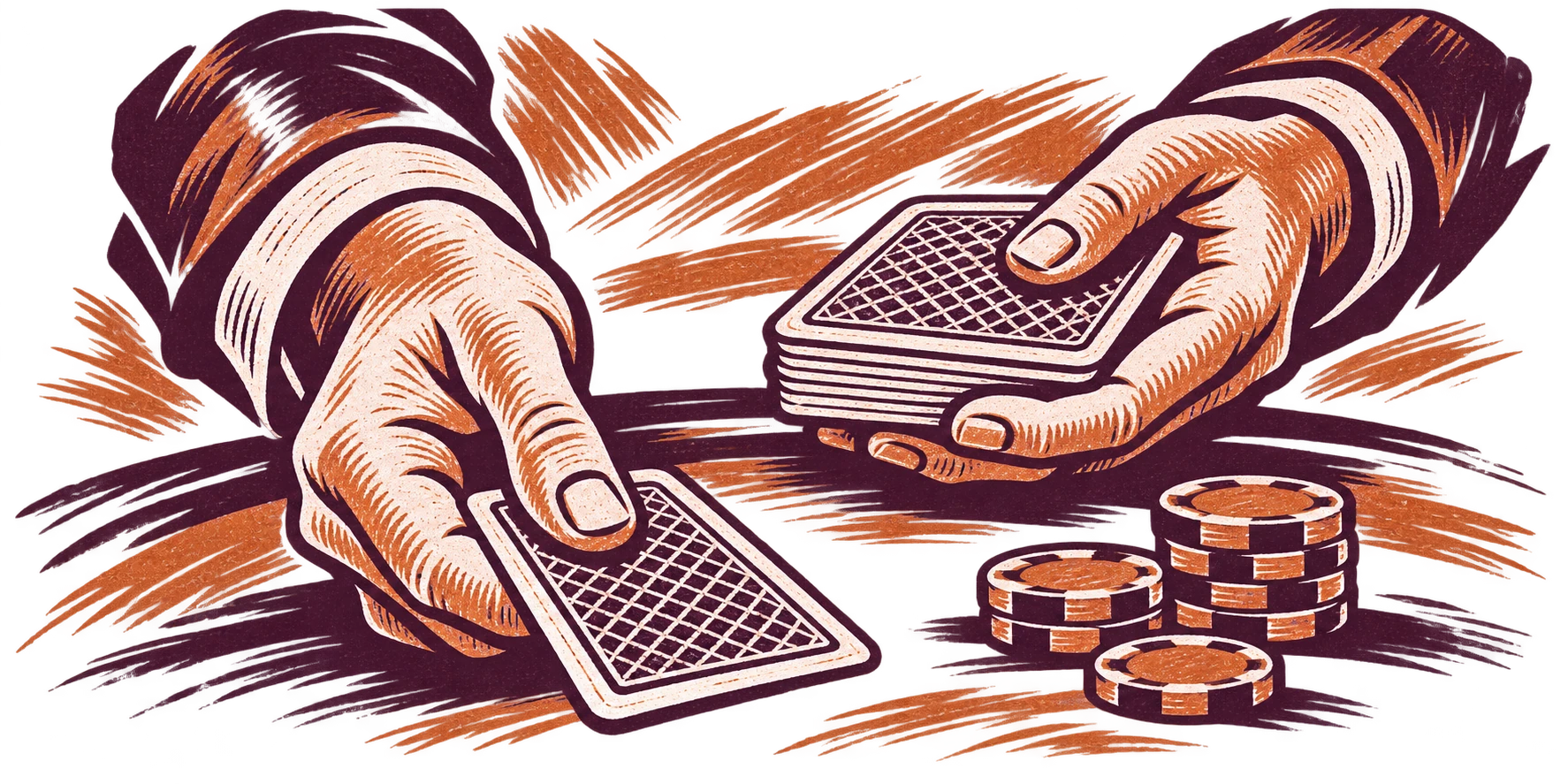
A dealer-led round is built around a visible sequence. There is time before an event, the event itself, and a moment when its result becomes clear. A camera gives those stages a shared point of view: it might stay close to a hand, follow a wheel or show the wider table.
The appeal of a live presentation is partly in its unhurried gestures. Cards are placed one after another; a wheel turns while the table waits. A presenter’s movement can make a short interval feel like a distinct part of the round rather than empty time.
Different tables can use the same visual language without feeling alike. A close camera makes the details of a deck prominent, while a wider view shows the relationship between dealer, table and surroundings. Lighting and colour create atmosphere, but the event remains the centre of attention.
In an imagined studio, for example, a quiet pause before the last card could be followed by a quick change of camera. That is a general scene, not an account of a particular Mr Rex table. Its purpose is to show how presentation shapes the experience of watching a round unfold.
Wheel, hand and comparison
Roulette makes movement visible. The wheel turns, the ball travels in the opposite direction, and the scene settles into one result. Its circular layout gives the game a distinctive silhouette, whether the camera is directly overhead or looking across the table.
Blackjack has a more intimate scale. The focus is a hand and the relationship between its cards. The UK Gambling Commission describes blackjack as a game played around a total of 21. Different versions have their own details, but the sequence of dealt cards provides the visual story.
Baccarat presents a comparison between Player and Banker hands. Its table can feel more symmetrical, with attention moving between two sides before the result is shown. Although cards are central to both baccarat and blackjack, the two formats create quite different rhythms.
These examples are about the character of the games, not prices or a claim about a particular table’s availability. What appears on a named service and how a version is presented depends on that service and its current information.
Familiar names, distinct rounds
Teen Patti is associated with three-card hands, while Andar Bahar centres on a match to a reference card. Their names are familiar to many Indian readers, yet the two arrangements invite very different ways of looking at the table.
In Teen Patti, a small number of cards carries the visual focus. In Andar Bahar, attention moves between two sides as cards appear. The comparison is about their broad forms; individual versions may use their own sequence and terms.
Card backs, felt, chips and the spacing of hands all contribute to the scene. A crowded table can feel energetic, while a simple layout leaves room for the motion of a single card. In either case the reveal is the point toward which the earlier gestures lead.
The moment of the reveal
A wheel’s slowing motion and a card turning face up create suspense in different ways. One reveals a result through a continuous movement; the other changes the meaning of the picture in an instant. Both are small events, made memorable by everything that precedes them.
Sound can underline the change without needing a complicated scene. The sound of a wheel or the tap of a card on a table gives a viewer a sense of material and distance. On a screen, those familiar cues help connect the image to a physical table.
The same scene on a smaller screen
On a phone, a wheel or set of cards may occupy most of the available space. A useful layout keeps the important parts legible as the scene changes. Scale changes how a viewer experiences the table, even when the underlying event remains the same.
Design choices become especially visible at that size. Contrast separates a card from its background; a clear label can identify a table without competing with the action. The result is not a different game, but a different frame around the same moment.
A shared moment, an uncertain ending
A roulette spin, a blackjack hand and a baccarat comparison each create a different kind of suspense. Earlier outcomes do not guarantee a future result, and gambling can lead to loss. The common thread is the pause before an event resolves.
The Mr Rex slots feature follows another rhythm, built around symbols that move and settle together. The two formats tell different visual stories in the space of a short round.
Why do two tables feel different?
Their games, presentation and versions can differ. The named table’s current information describes its own rules.